The beauty of travelling to Canada is that everywhere you look there’s something new and amazing to discover, from the majestic natural beauty of Lake Louise, Niagara Falls and the Rocky Mountains, to the Northern Lights in the north and the world’s largest ice floes in the Yukon, to the prairies of the central prairies and the autumn colours of Canada. In addition, Canada offers a wealth of outdoor activities and cultural offerings that welcome people from all over the world.

1. Canada Quick Facts
Language English, French
Religion Protestant, Catholic
Currency Canadian Dollar (CAD, C$)
Visa require a visa, ETA required 180 days visa-free

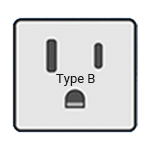
Power Plugs 120 V 60 Hz (A,B Type)
Capital Ottawa
ATM
ATMs are also readily available, allowing you to withdraw local currency using your credit or debit card.
Use card
Credit cards are accepted almost everywhere, including general stores, supermarkets, markets, restaurants, hotels, etc. Some restaurants only accept debit cards or cash, so it’s always a good idea to have a debit card or some cash on hand.
Useful APP
Google Maps
EAST APP
Uber
Lyft
2. Packing for your trip
Air plain Ticket
Dollar Flight Club has made it easier and cheaper to buy flights to the International airports in the Canada.
SIM card
Airalo is the world’s first eSIM store that solves the pain of high roaming bills by giving you access to 200+ eSIMs (digital SIM cards) globally at affordable prices.
New member one-time use 15% discount coupon
10% discount coupon for multiple use by all members.
Pacsafe Pro safe 800 Luggage Lock
Good protection against snatchers or impulse thieves.
Universal Power Adapter
One of the most essential but most forgotten items in your travel gear? A power adapter!
Travel insurance
Prepare for risky situations Travel insurance can be a big help in the event of an emergency
GoPro HERO
If you want to capture your own memories of your travels, GoPro is the way to go. It’s small, has great image quality, and is easy to carry around
3. Transportation
3-1. Toronto
Toronto public transit can be used in a variety of ways, including Presto, Metropass, credit and debit cards.
Presto, a prepaid transit card, is also available outside of Toronto, making it a great option if you’re travelling outside of the city frequently.
Presto cards can be purchased online and offline for C$6.00, with a minimum load of C$5.00. The Presto Card costs C$3.30 per one-way journey.
There are two ways to use the Presto Card. If you’re an infrequent TTC rider, you can use a one-way or day pass (C$13.50).
In August 2023, the TTC introduced the use of credit and debit cards in addition to cash and Presto. Previously, you had to swipe a loaded physical Presto card through the turnstiles, but now you can easily pay with a physical Presto card, credit or debit card, and the NFC capabilities of your phone or smartwatch.
Buses
Toronto’s city buses, along with subways and streetcars, are the core public transit system operated by the Toronto Transit Commission (TTC).
The TTC operates more than 150 bus routes throughout Toronto and parts of Mississauga and York Region.
City buses
Operating 24 hours a day, most buses are low-floor, wheelchair-accessible, and have bike racks on the front of the bus.
Subway
The city’s subway system, the largest in Canada, operates on four lines
Streetcars
There are 10 streetcar lines in operation.
Taxis
There are no taxi stands in downtown Toronto, so taxis can be hailed freely on the street, or you can call a taxi from your hotel.
Outside of the city centre, in residential areas and suburbs, taxis are harder to come by on the street, so calling a taxi in advance is a popular option.
The base fare for a taxi in Toronto is C$4.25, with an additional C$1.75 per kilometre.
You can generally expect to pay between C$20 and C$30 for an intercity journey in Toronto and Vancouver.
3-2. Vancouver
The Campus Card ($6 card deposit) covers all public transport (Skytraion, Bus, Sea Bus).
The transit system has zones 1, 2, and 3.
Same zone $2.55 each
3.55 for travelling between 1-2 zones, 2-3 zones, 3-2 zones and 2-1 zones
4.88 for a 3-zone transfer from 1 zone to 3 zones and from 3 zones to 1 zone
Transfers are available within 90 minutes.
From 6:30 on weekdays, 1zoon fare on weekends and public holidays.
day pass 11.25
Sky Train: Downtown (Expo Line), Richmond and Airport (Millennium Line), Canada Line.
Bus: Touch card only when boarding (also when transferring), pull yellow lanyard when stopping.
*Sea Bus: For travelling between North Vancouver.
3-3. Uber and Lyft
The number of people using Uber and Lyft to request a ride from the convenience of a smartphone app is growing rapidly.
This is because they are cheaper than regular taxis and are more convenient than regular taxis because you can register your credit card details and pay automatically.
Ride-sharing services charge a surcharge of 1.8 to 2.5 times the base fare during peak hours, so it’s a good idea to check before you request a ride.
Also, ridesharing services are not available everywhere in Canada, as traffic laws vary by region. As of September 2023, they only operate in 27 Canadian cities, excluding some mountainous areas, and lifts are currently only available in 12 cities in Alberta, British Columbia, and Ontario.
3-4. Renting a car
If you have an international driver’s licence and a credit card, it’s easy to rent a car with insurance.
However, it’s worth noting that if the driver is under the age of 25, there may be restrictions on how far the vehicle can travel.
4. Safety
Canada’s large cities have low crime rates comparable to even the safest small towns in the United States, making it relatively easy to go out at night, travel alone, and take public transport. However, there has been an increase in the number of crimes committed with firearms, especially in large cities, so it’s important to be aware and take precautions in these areas.
Be careful in areas with a high concentration of entertainment venues, as shootings and assaults tend to be relatively frequent, and avoid deserted parks after dark.
There has also been a controversial rise in petty crime, such as smartphone and tablet theft, in Canada’s larger cities. You should be especially cautious when using your electronics in public, especially at night, because of the risk of theft. In public places like cafes and restaurants, don’t leave your belongings unattended and keep them with you at all times.
Hate crimes against Asians are on the rise. As a multicultural and multiracial society, please refrain from making hostile remarks about the culture and traditions of other ethnic groups.
It is safer to avoid going out late at night or in the early hours of the morning, both in and out of town, especially if you are intoxicated and walking around late at night.
Useful phone numbers for tourists
Emergency numbers (police/fire/ambulance): 911
5. Climate
The climate is mostly cool, with the exception of the Pacific coast, which has a humid temperate climate. However, compared to Seoul, the Toronto area is dominated by a temperate climate, with short spring and autumn and relatively long winters (November to April). In addition, the western mountains and inland plains have a continental climate, with extreme temperature differences.
The Toronto area has a temperate climate with short spring and autumn seasons, while winter lasts from November to early April, and snowfall is common. Especially in January and February, temperatures drop significantly, and wind chills can reach -30°C or lower on an average of 2-3 days per week.
Canada is great in all seasons, but depending on the region, the best time to travel is June to August in the west, where there are many national parks near the Rockies; November to April in the north, where you can see the Northern Lights; and September to October in the east, where the autumn leaves are beautiful. The western part of the country, covered in national parks, enjoys sunny weather in summer. The northern part of the country is famous for its aurora borealis. You’ll have to brave the bitter cold to see this mystical sight. If you want to see the east, with its large cities, we recommend travelling in the autumn when the leaves are changing color.
6. price
Prices in Canada are higher than in all of the United States.
McMeal at McDonalds (or Equivalent Combo Meal) : 14.00 C$
Water (1.5 liter bottle) : 2.41 C$
Milk (regular), (1 liter) : 2.89 C$
Gasoline (1 liter) : 1.59 C$
7. Travel precautions
Canada is a country of natural beauty and conservation. To respect and protect the natural environment, be mindful of protecting natural ecosystems by disposing of trash in the right places, following signs for trails and national parks, etc.
Canada is a large country, so the climate varies from region to region. Pack seasonally appropriate clothing and research the weather in the areas you plan to visit.
Be aware of wildlife in natural ecosystems, especially if you encounter a bear, it is important to follow your guide’s instructions, and if you encounter a bear without a guide, stay in a group and appear larger, and if you encounter a bear up close, do not run with your back to it, face it, make loud threats, and slowly move to a safe place behind it. Be sure to bring bear spray with you on your hikes.
Bear Encounter Guidelines
8. Etiquette & Service Tip
Personal space is highly valued in Canada and you should avoid getting too close or touching people’s things inappropriately.
It is common in Canada to shake hands with people you meet for the first time, which is accepted as a sign of courtesy and respect.
Tip
Tipping in restaurants and taxis is 10 to 15 per cent of the bill, while tipping porters at hotel check-in and check-out is around C$1 to C$2 per piece of luggage.
It is polite to leave C$1 to C$2 on the bed when you leave your room in the morning.
9. Holidays
The public holidays in USA in 2024
1 Jan Mon New Year’s Day
29 Mar- Fri Good Friday
1 April Mon Easter Monday
20 May Mon National Patriots’ Day/ Victoria Day
24 June Mon Saint-Jean-Baptiste Day
1 July Mon Canada Day
2 September Mon Labour Day
14 October Mon Thanksgiving
24 December Tue Christmas Eve
25 December Wed Christmas Day
31 December Tue New Year’s Eve
2025 National Public Holidays:
Wednesday, 1 January : New Year’s Day
Monday,17 February : Family Day AB, BC, NB, ON & SK
Monday,17 February : Islander Day PE
Monday,17 February : Louis Riel Day MB
Monday,17 February : Nova Scotia Heritage Day NS
Monday,17 March : Saint Patrick’s Day NL
Friday, 18 April : Good Friday Federal workers; National
Monday,21 April : Easter Monday Federal workers; AB, NT, NU, QC
Monday,21 April : Saint George’s Day NL
Monday,19 May : Victoria Day Federal workers; National except NS, PEI & QC
Monday,19 May : National Patriots’ Day QC
Saturday, 21 June : National Indigenous Peoples Day NT & YT
Monday,23 June : June Holiday NL
Tuesday, 24 June : St Jean Baptiste Day QC
Tuesday, 1 July: Canada Day Federal workers; National except MB
Tuesday, 1 July: July 1 MB
Wednesday, 9 July: Nunavut Day NU
Monday,14 July: Orangeman’s Day NL
Monday,4 August : Civic Holiday Federal workers; NT, NU
Monday,4 August : Saskatchewan Day SK
Monday,4 August : New Brunswick Day NB
Monday,4 August : B.C. Day BC
Monday,4 August : Alberta Heritage Day AB
Monday,18 August : Discovery Day YT
Monday,1 September : Labour Day Federal workers; National
Tuesday, 30 September : National Day for Truth and Reconciliation Federal workers; AB,BC,MB,NL,PEI, YT
Monday,13 October : Thanksgiving Day Federal workers; National except NS & PEI
Tuesday, 11 November : Remembrance Day Federal workers; National except MB, NS, ON & QC
Thursday, 25 December: Christmas Day Federal workers; National
Friday, 26 December: Boxing Day Federal workers; AB, NB, NL, NT, NU, ON
*Provinces & Territories
Ontario ON
Quebec QC
Nova Scotia NS
New Brunswick NB
Manitoba MB
British Columbia BC
Prince Edward Island PE
Saskatchewan SK
Alberta AB
Newfoundland and Labrador NL
Northwest Territories NT
Yukon YT
Nunavut NU