Hey wanderlusters! Ever dreamed of soaking in a steaming outdoor bath while snowflakes dance around you? Welcome to Hokkaido’s onsen (hot spring) paradise, where ancient volcanic activity meets Japanese tradition to create the most magical winter experience imaginable.

Why Hokkaido Hot Springs in Winter?
There’s something uniquely magical about Hokkaido’s onsens in winter. Picture this: you’re immersed in 104°F (40°C) mineral-rich waters while surrounded by snow-capped mountains and pristine forests. The steam rises into the crisp winter air, creating an otherworldly atmosphere that’s distinctly Japanese. Plus, winter is actually the best time to experience these natural wonders—the contrast between the hot springs and cold air enhances both the therapeutic benefits and the overall experience.
1. Noboribetsu Onsen: The Crown Jewel
Let’s kick off with Hokkaido’s most famous hot spring resort. Noboribetsu isn’t just another onsen—it’s nature’s pharmacy, boasting 11 different types of mineral waters. The star attraction? A spectacular sulfur spring that locals swear by for beautiful skin.
What makes it special:
- Hell Valley (Jigokudani): A dramatic volcanic valley that supplies the hot springs
- Temperature range: 122°F (50°C) at source, cooled to perfect bathing temperature
- Best time to visit: Early morning for crowd-free soaking or evening for illuminated views
Tip: Book a ryokan (traditional inn) with private onsen access. Trust me, there’s nothing like having your own hot spring bath with a view of the snow-covered valley.
2. Yunokawa Onsen: Where Tradition Meets Luxury
Ever wanted to time-travel while enjoying modern comforts? Yunokawa Onsen lets you do exactly that. This 100-year-old hot spring town perfectly blends traditional ryokans with contemporary luxury resorts.
What makes it special:
- Crystal-clear alkaline waters (pH 8.0)
- Temperature: 98.6°F (37°C)—perfect for extended soaking
- Location: Right beside the ocean, creating a unique “mist meets waves” scenery
- Famous for: Gourmet kaiseki dinners featuring fresh Hokkaido seafood
Tip: Book the “Yuki-mi” package (snow-viewing bath) between December and March. The combination of falling snow and rising steam creates a photographic masterpiece!
3. Shikotsuko Onsen: Lake Views that Steal Your Heart
Imagine soaking in a hot spring while gazing at Japan’s clearest lake. That’s Shikotsuko Onsen for you. Located on the shores of Lake Shikotsu, this onsen offers what I consider the most serene bathing experience in Hokkaido.
What makes it special:
- Never-freezing lake (Japan’s northernmost ice-free lake)
- Water temperature: 100.4°F (38°C)
- Mineral composition: Gentle on skin, perfect for sensitive types
- Winter illumination festival (January-February)
Tip: The ice sculptures during the winter festival are lit up at night—plan your evening bath to coincide with this spectacular show!
4. Jigokudani Onsen: The Wild One
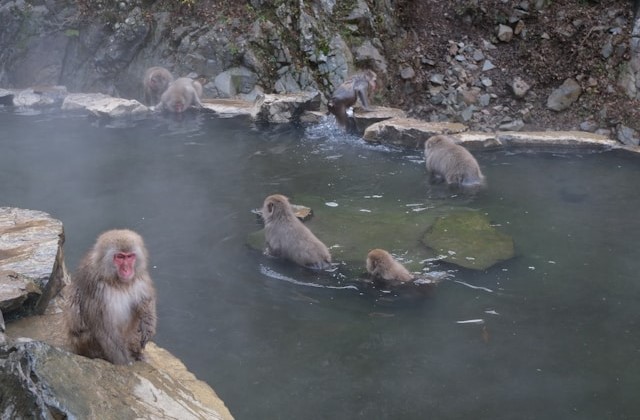
Welcome to “Hell Valley”—don’t” let the name scare you! This geothermal wonderland offers one of Hokkaido’s most unique onsen experiences. Where else can you share a hot spring with wild snow monkeys?
What makes it special:
- Natural volcanic steam vents
- Water temperature: varies by pool, 95-107.6°F (35-42°C)
- Famous residents: Japanese macaques (snow monkeys)
- Therapeutic mud baths
Tip: Visit between 8 and 10 AM to catch the snow monkeys at their most active. They’re surprisingly punctual!
5. Akanko Onsen: Stargazer’s Paradise
Want to combine stargazing with your onsen experience? Akanko Onsen is your spot. This lesser-known gem offers something truly special: open-air baths under the clearest night skies in Hokkaido.
What makes it special:
- Iron-rich red waters (hence the name ‘Aka’)
- Temperature: 102.2°F (39°C)
- Designated dark sky viewing spot
- Private baths available for couples
Tip: Check the lunar calendar before booking; new moon periods offer the best stargazing opportunities.
Essential Planning Tips
🎒 What to Pack:
- Quick-dry towels (small ones for head)
- Flip-flops (many onsens sell these too)
- Water bottle (staying hydrated is crucial!)
- Camera (waterproof recommended)
- Cash (many rural onsens don’t accept cards)
💰 Budget Planning:
- Day pass: ¥500-1,500 ($5-15)
- Ryokan stay: ¥15,000-40,000 ($150-400) per person
- Private bath rental: ¥3,000-5,000 ($30-50) per hour
🚆 Getting Around:
- JR Hokkaido Pass recommended
- Most locations accessible by train + local bus
- Rental car ideal for winter (4WD necessary)
Onsen Etiquette 101
First time at a Japanese onsen? Here’s your crash course:
- Shower thoroughly before entering the bath
- No swimsuits allowed (yes, really!)
- Small towel on head is OK, but don’t let it touch the water
- Tattoos might be an issue – book private baths if concerned
- Take lots of breaks and stay hydrated
When to Visit
Peak Season: December-February
- Pros: Maximum winter magic, best photo ops
- Cons: Higher prices, bigger crowds
Shoulder Season: November & March
- Pros: Better deals, fewer tourists
- Cons: Less reliable snow conditions
Hokkaido’s winter onsens offer more than just a bath—they’re a gateway to understanding Japanese culture, connecting with nature, and experiencing true relaxation. Whether you’re seeking healing waters, Instagram-worthy views, or simply a warm escape from winter’s chill, these five hot springs deliver unforgettable experiences.
Remember: Each onsen has its own personality, so don’t rush. Take time to soak in both the waters and the atmosphere. After all, isn’t that what travel is all about?