Nestled in the heart of Europe, Strasbourg stands as a testament to the harmonious blend of French and German cultures. As the official seat of the European Parliament and a UNESCO World Heritage site, this enchanting city offers visitors a unique glimpse into both historical charm and modern European diplomacy. From its iconic cathedral to the picturesque Petite France district, Strasbourg’s rich heritage and vibrant present make it an unmissable destination for any European traveler.
1. Discovering Strasbourg: The Capital of Europe
Strasbourg, the capital of France’s Grand Est region, embodies the essence of European unity. Its very name, derived from the German words “Straße” (street) and “Burg” (city), reflects its historical position as a crossroads of cultures. Located on the border between France and Germany, the city has alternated between both nations throughout history, creating a unique cultural identity that’s neither purely French nor German but distinctively Strasbourgeois.
Today, Strasbourg serves as one of the three capitals of the European Union, alongside Brussels and Luxembourg. Home to the European Parliament, the Council of Europe, and the European Court of Human Rights, it plays a crucial role in European politics and diplomacy. The city’s Grande Île (Grand Island) was designated as a UNESCO World Heritage site in 1988, recognizing its exceptional architectural heritage and historical significance.
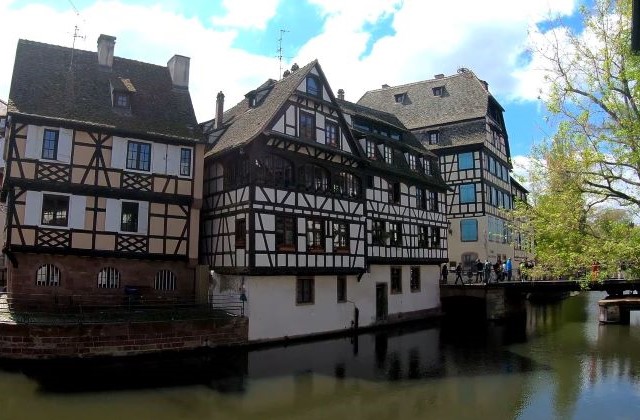
The cultural fusion is evident in everything from the architecture to the cuisine, making Strasbourg a living museum of European integration. Traditional half-timbered houses stand alongside grand French baroque buildings, while the local dialect still carries traces of both French and German influences.
2. Must-Visit Attractions in Strasbourg
Strasbourg Cathedral (Cathédrale Notre-Dame de Strasbourg)
Standing proud at 142 meters (466 feet), this masterpiece of Gothic architecture dominates the city skyline. Built between 1176 and 1439, the cathedral’s intricate sandstone facade and single spire (the second spire was never completed) create a unique silhouette. The astronomical clock inside is a remarkable piece of Renaissance engineering, still functioning today with daily shows at 12:30 PM.


Petite France
The most photogenic quarter of Strasbourg, Petite France showcases perfectly preserved half-timbered houses from the 16th and 17th centuries. Once home to tanners, fishermen, and millers, these buildings now house charming restaurants, boutiques, and hotels. The area is particularly magical during sunset when the houses reflect in the calm waters of the canals.
European Parliament
A striking example of modern architecture, the European Parliament building symbolizes Strasbourg’s role in contemporary European politics. The glass building, designed to represent transparency in governance, offers guided tours where visitors can learn about the European Union’s legislative process.
Palais Rohan
Often called the “Versailles of Strasbourg,” this 18th-century palace houses three significant museums: the Archaeological Museum, the Museum of Decorative Arts, and the Museum of Fine Arts. The baroque architecture and lavish interior decorations provide insight into the city’s royal history.
Covered Bridges (Ponts Couverts)
These medieval bridges, though no longer covered, offer spectacular views of Petite France and the cathedral. The nearby Barrage Vauban provides panoramic views of the entire historic center, especially beautiful during sunset.
3. Experience Strasbourg Like a Local
To truly understand Strasbourg’s unique character, venture beyond the tourist hotspots and explore the city as locals do. Here’s how to experience authentic Strasbourg:
Place Kléber
The beating heart of Strasbourg, Place Kléber is where locals gather for events, shopping, or simply to enjoy a coffee at one of the many cafés. During December, it transforms into part of the famous Christmas Market (Christkindelsmärik), Europe’s oldest and most renowned holiday market dating back to 1570.

Orangerie Park (Parc de l’Orangerie)
This sprawling 26-hectare park is Strasbourg’s largest and oldest public garden. Locals flock here for weekend picnics, jogging, or to visit the small zoo. Don’t miss the charming pavilion restaurant or the stork sanctuary—these birds are symbols of Alsace and have made the park their home.
Le Krutenau Quarter
This historic neighborhood has evolved into a trendy area where students and artists mingle in hip cafés and independent boutiques. Visit on weekends for the vibrant farmers’ market and authentic local atmosphere.
4. Culinary Journey Through Strasbourg
Strasbourg’s gastronomy reflects its unique position between French and German cultures, creating the distinctive Alsatian cuisine.

Must-Try Local Specialties
- Choucroute Garnie: The ultimate Alsatian dish combining sauerkraut with various cuts of pork and sausages
- Tarte Flambée (Flammekueche): A thin-crusted “pizza” topped with crème fraîche, onions, and lardons
- Baeckeoffe: A hearty casserole of marinated meats, potatoes, and vegetables
- Kougelhopf: A distinctive Alsatian brioche traditionally eaten for breakfast
Best Restaurants
Maison Kammerzell (1427)
- Location: Next to the Cathedral
- Speciality: Traditional Alsatian cuisine in a historic setting
Au Crocodile (Michelin-starred)
- Location: Rue de l’Outre
- Speciality: Modern interpretations of Alsatian classics
Chez Yvonne
- Location: Rue du Sanglier
- Speciality: Authentic winstub (traditional Alsatian tavern) experience
5. Practical Travel Information
Best Time to Visit
- Spring (March-May): Mild weather, blooming gardens
- Summer (June-August): Warm temperatures, outdoor festivals
- Fall (September-November): Wine harvest season, fewer tourists
- Winter (December): Famous Christmas markets, festive atmosphere
Transportation Tips
- Tram System: Efficient network covering major attractions
- Vélhop: City’s bike-sharing system, perfect for exploring
- Walking: Historic center is compact and pedestrian-friendly
Accommodation Recommendations
- Historic Center: Best for first-time visitors, close to attractions
- Krutenau: Hip neighborhood with local vibe
- European Quarter: Modern area, good for business travelers
Strasbourg offers visitors a unique European experience where French sophistication meets German efficiency, creating something entirely its own. Whether you’re interested in history, politics, gastronomy, or simply soaking in the atmosphere of a truly European city, Strasbourg delivers an unforgettable experience.
INFO
Tourist Information Centre Grand Île, Strasbourg, France
Tel +33388522828
Strasbourg Cathedral
Address: Place de la Cathédrale, 67000 Strasbourg
Opening hours: Cathedral
Mon-Sat 08:30-11:15,12:45-17:45.
Sun 14:00-17:45
Observatory
Apr-Sep 09:30-13:00, 13:30-20:00/
October to March 10:00-13:00,13:30-18:00
(Closed 1 Jan, 1 May, 25 Dec)
Tel: +330388 214334
Pro Tips:
- Purchase the Strasbourg Pass for free entry to major attractions
- Book restaurants in advance, especially for dinner
- Learn basic French greetings, though many locals speak English
- Visit during weekdays to avoid weekend crowds
- Take advantage of free walking tours starting from the Cathedral
Remember, Strasbourg isn’t just a destination; it’s a living symbol of European unity and cultural harmony. Its ability to blend different influences while maintaining its unique character makes it a must-visit destination for anyone seeking to understand the heart of modern Europe.